A New Approach to the Ski Season: Four Destinations Rethinking How We Travel in Winter
A more considered form of winter travel is emerging in destinations where environmental planning shapes the mountain and design responds directly to landscape.
Aspen, Niseko, Andermatt, and the Dolomites work within defined ecological frameworks that influence how ski terrain is maintained, how development is scaled, and how visitors move through the region.
Their properties extend these principles through material precision, controlled proportion, and architecture that situates itself within, rather than above, its surroundings. The result is winter travel guided by coherence, discipline, and a grounded relationship to the land.
Aspen Snowmass, Colorado
Mountain Stewardship as Operational Standard
Aspen Snowmass remains one of the clearest examples of a ski destination organized around environmental governance. The resort’s operations rely on renewable energy, calibrated water systems, and transparent carbon accounting. Methane-to-electricity conversion and high-efficiency snowmaking reflect a technical approach that prioritizes adaptation over expansion. These systems support all four mountains in the Aspen Snowmass network, allowing the terrain to operate within the limits of the valley.
The town reinforces this structure. Architectural codes preserve scale and visual coherence, and development remains tied to the landscape’s carrying capacity. Environmental planning is not an external layer. It defines how the destination functions from the ground up.
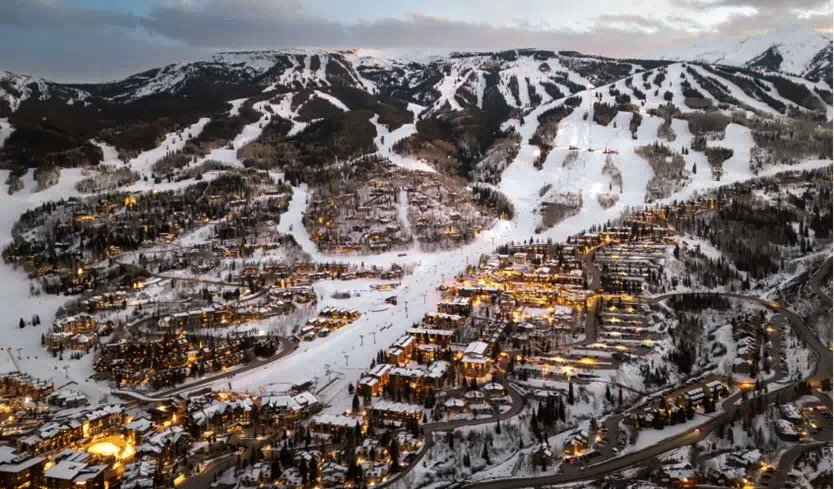
Image courtesy of: Aspen Snowmass
Where to stay: The Little Nell
The Little Nell interprets Aspen’s approach through warm materials, balanced proportion, and interiors shaped with quiet precision. The atmosphere is steady and composed, reflecting the valley’s long-view environmental ethic.
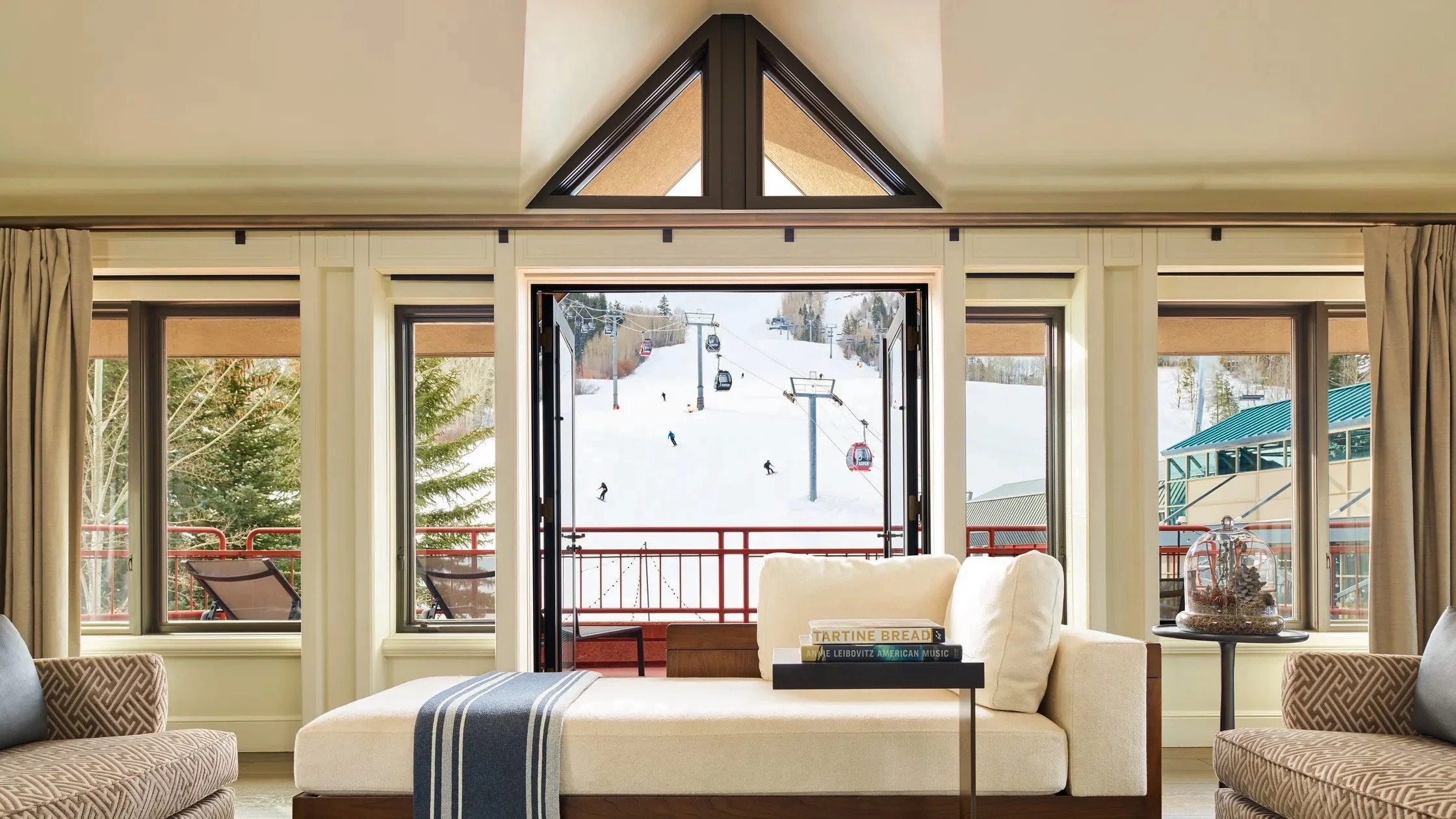
Image courtesy of: CN Traveler
Niseko, Hokkaido
A Landscape Guided by Snow, Geothermal Rhythm, and Architectural Restraint
Niseko’s landscape operates on natural abundance. Heavy powder arrives without intervention, reducing the need for artificial snowmaking, while geothermal systems support much of the built environment.
Planning protects forest edges and open sightlines, allowing the terrain to set spatial boundaries. Village operations prioritize waste reduction and long-term stewardship. Niseko Town, designated as one of Japan’s eco-model municipalities, is working toward carbon neutrality by 2050, with projects like the Niseko Mirai geothermal eco-village expressing these commitments through infrastructure rather than messaging.
The result is a ski environment shaped by continuity and restraint. The mountain feels intact, and the experience retains a closeness to landscape that rapid development often erodes.
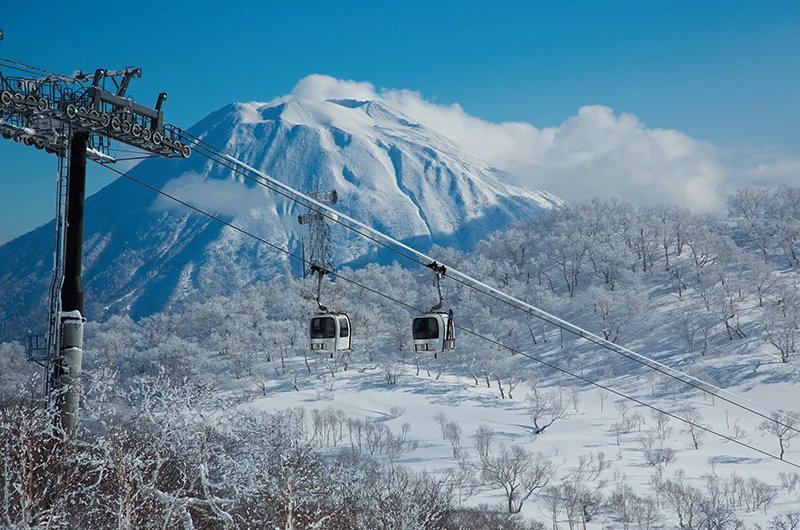
Image courtesy of: Niseko United
Where to stay: Zaborin
Zaborin extends this discipline into its architecture. Fifteen timber villas by architect nA Nakayama sit within the Hanazono forest. Each opens to still expanses of snow and is heated by natural hot springs drawn nearly a kilometer below ground. Underfloor heating and private indoor and outdoor onsen follow the same geothermal rhythm. The property withdraws into the landscape, creating an experience defined by calm materials and a deliberate spatial cadence.
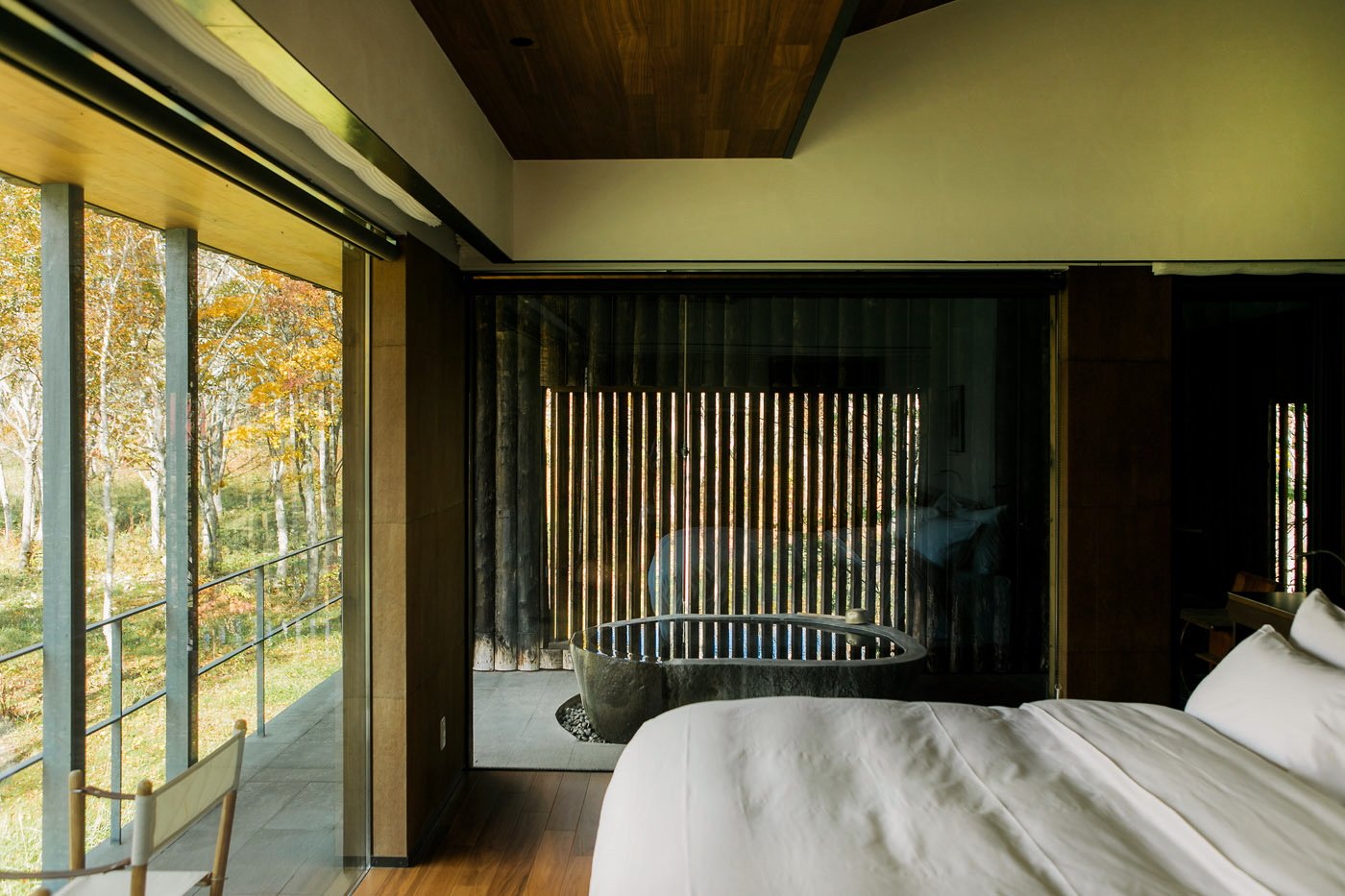
Image courtesy of: Zaborin
Andermatt, Switzerland
An Alpine Village Rebuilt Through Restoration
Andermatt represents one of the most comprehensive redevelopment efforts in the Alps, centered on ecological longevity. The SkiArena operates on hydropower and closed-loop water systems for snowmaking. Ninety percent of lift and snowmaking operations rely on renewable energy. Four wind turbines on Gütsch produce approximately 5.5 million kilowatt-hours annually, much of it during winter when demand peaks. Wood-fired heating from the nearby Göschenen plant is distributed through a valley-wide pipeline, reducing reliance on individual heating systems.
Mobility centers on rail access and low-carbon transport, maintaining village scale and minimizing road pressure. Since Vail Resorts’ 2022 investment, Andermatt has committed to achieving zero operational CO2 emissions by 2030, working with Protect Our Winters Switzerland and the Act Cleantech Agency to consistently exceed efficiency targets.
The ski terrain spans more than 120 kilometers between Andermatt and Sedrun, connected by the Oberalp Pass and the Matterhorn Gotthard Bahn, creating an integrated mountain environment without overwhelming the landscape.
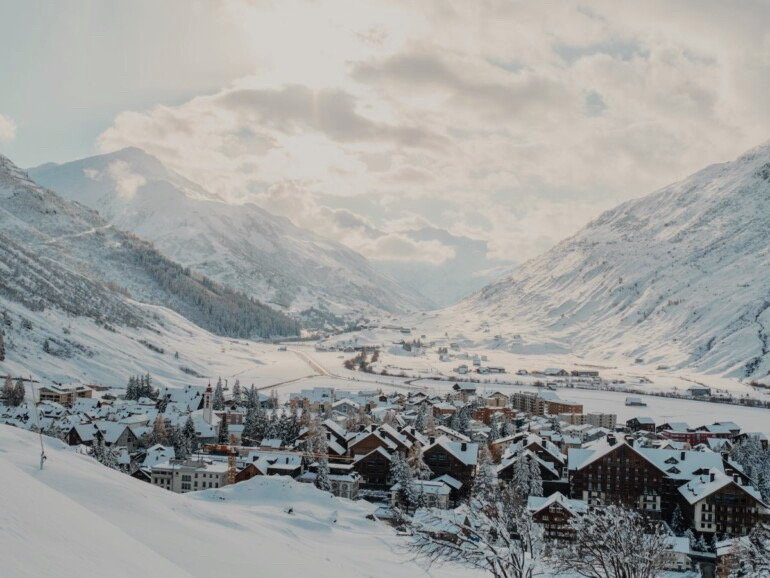
Image courtesy of: Marin Magazine
Where to stay: The Chedi Andermatt
The Chedi translates these principles into spatial form. Natural stone, wood, and controlled lighting define interiors that feel grounded and composed. Spaces balance weight with openness, creating a contemporary alpine clarity. The property sits confidently within a village shaped by long-term environmental directives rather than stylistic novelty.
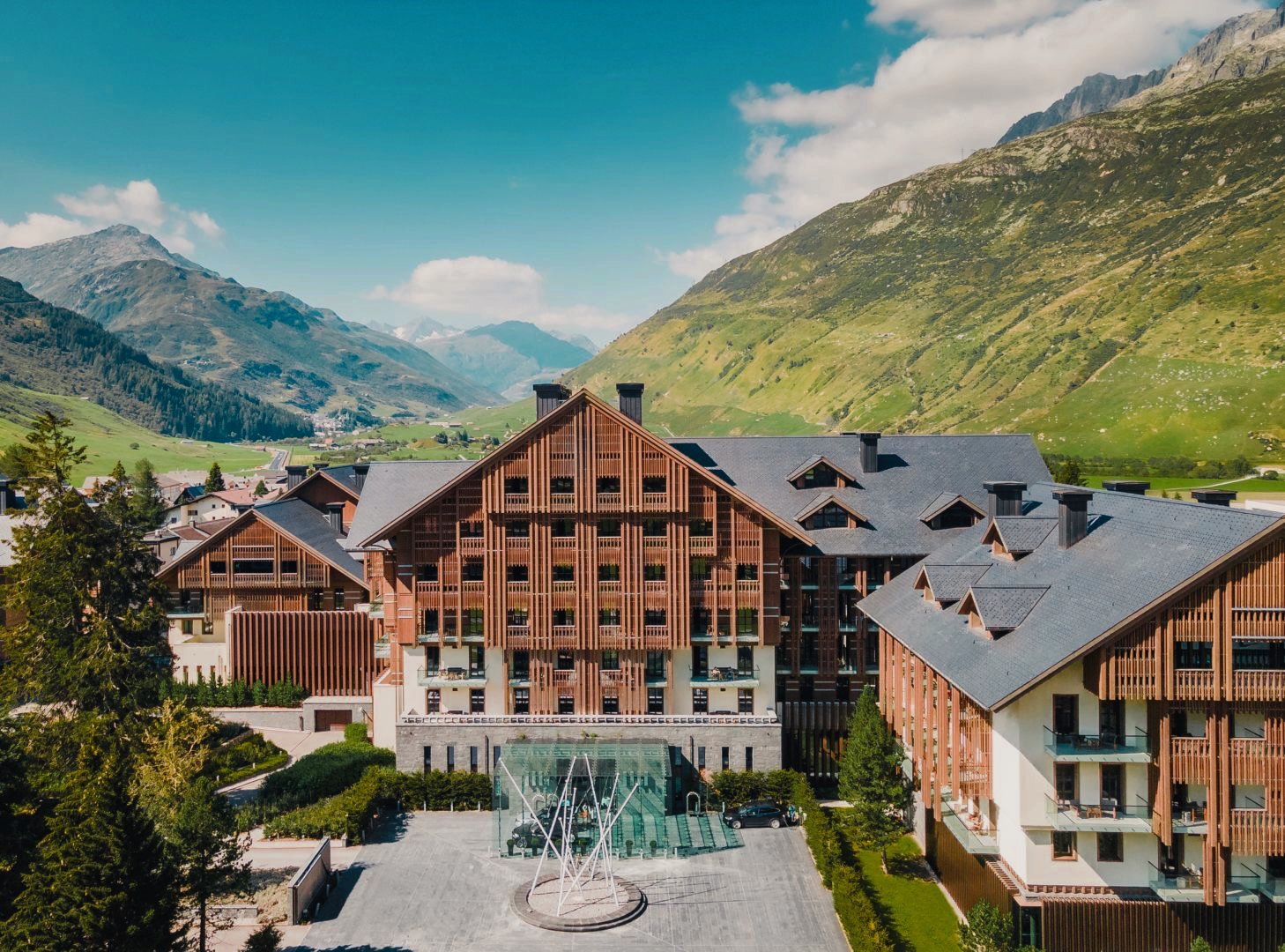
Image courtesy of: The Chedi Andermatt
The Dolomites, Italy
UNESCO Landscape Where Architecture Follows the Forest
The Dolomites operate under one of the most protective environmental frameworks in Europe. Declared a UNESCO World Heritage Site in 2009, the region encompasses nine mountain systems and 142,000 hectares, ninety-five percent of which lie within protected areas. The UNESCO Dolomites Foundation guides development to prevent overuse while supporting sustainable tourism. Snowmaking follows high-efficiency protocols with careful water management, and aerial lift systems often replace valley road access to reduce traffic impact.
Programs like DS Responsibility coordinate regional strategies for carbon reduction and operational monitoring. Ski areas such as Carezza have adopted green energy, annual CO2 measurement, and plastic-free water programs, integrating environmental goals into everyday function. These structures create a mountain environment defined by consistency and attentiveness rather than expansion.
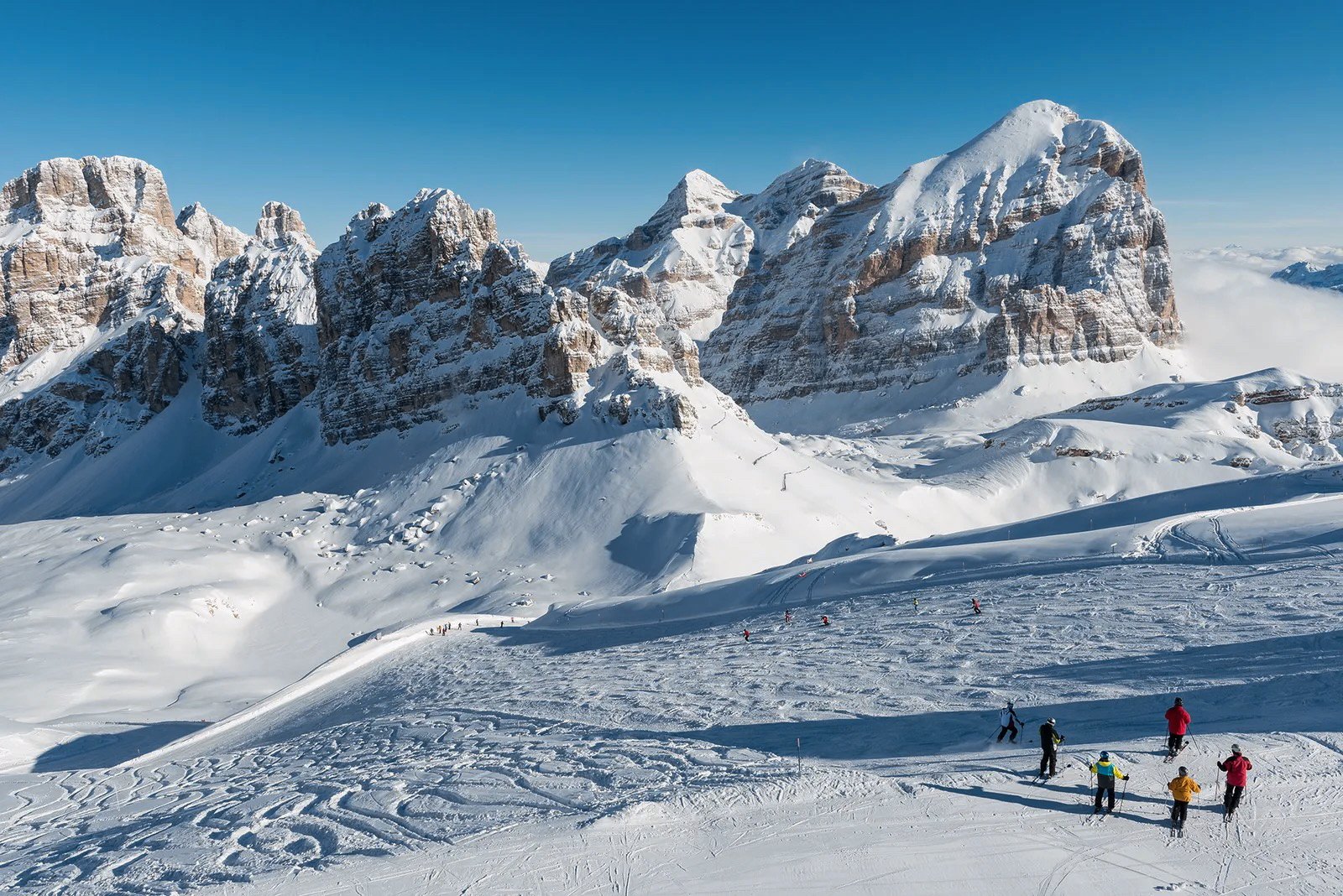
Image courtesy of: Vogue
Where to stay: Forestis
Forestis stands within this framework as a precise architectural response to the surrounding forest. Three timber towers by Armin Sader follow the vertical rhythm of the trees, minimizing footprint and integrating the building into the slope. Passive construction and renewable energy eliminate operational carbon, while interiors draw from local spruce and stone. Water comes from the Plose mountain spring, and amenities are produced in-house using plant-based formulations. Every element is tied to altitude, light, and the cycles of the landscape.
The atmosphere is quiet and elemental, offering winter as observation rather than performance.
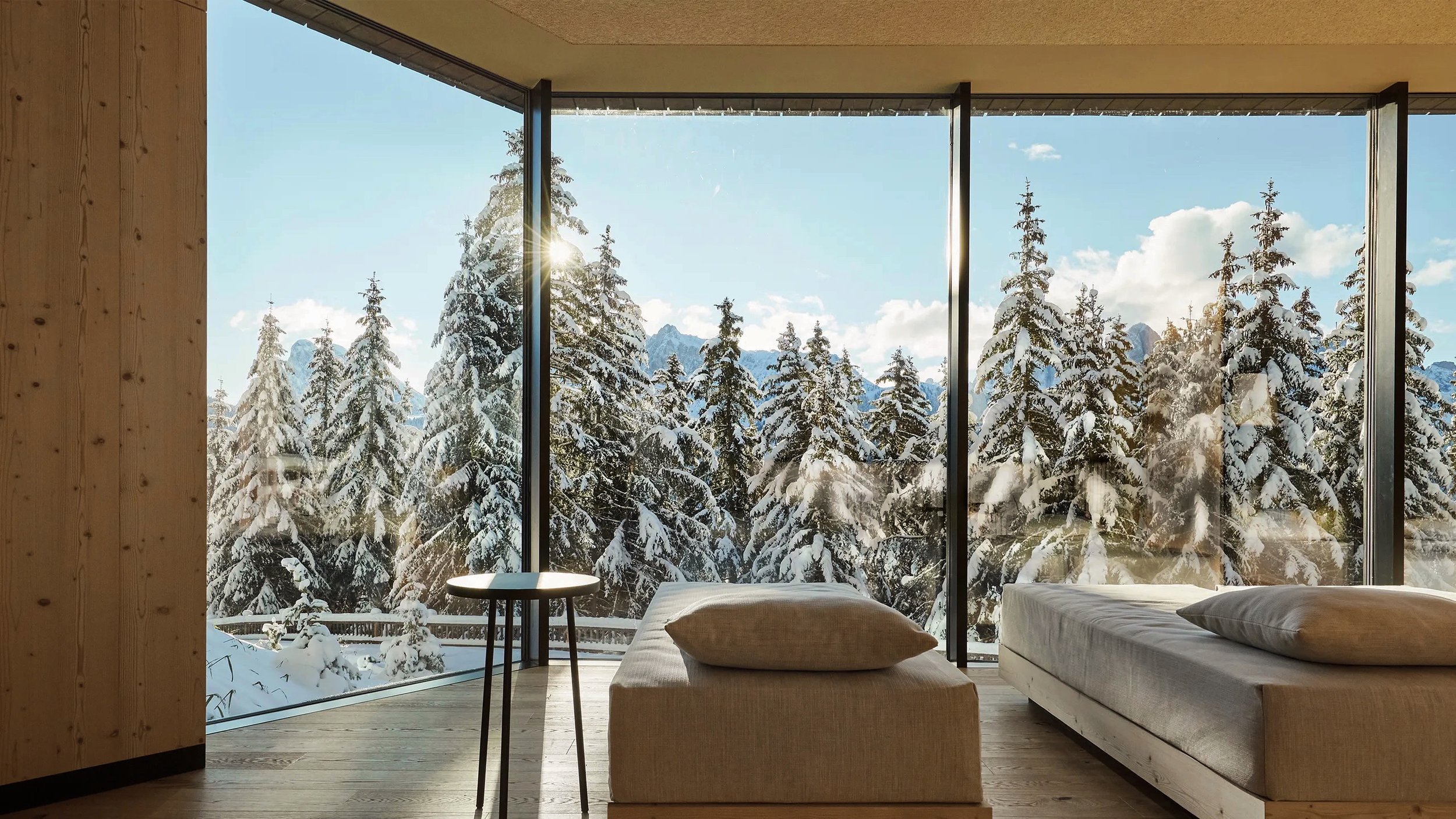
Image courtesy of: CN Traveler
Notes From HERBE.
The future of ski travel will depend on how well destinations balance experience with environmental reality. In these four places, that balance is already visible: mountains are managed with intention, architecture sits in conversation with terrain, and skiing becomes a cleaner, more integrated way to engage with winter. It is an approach that respects both the landscape and the people moving through it.
